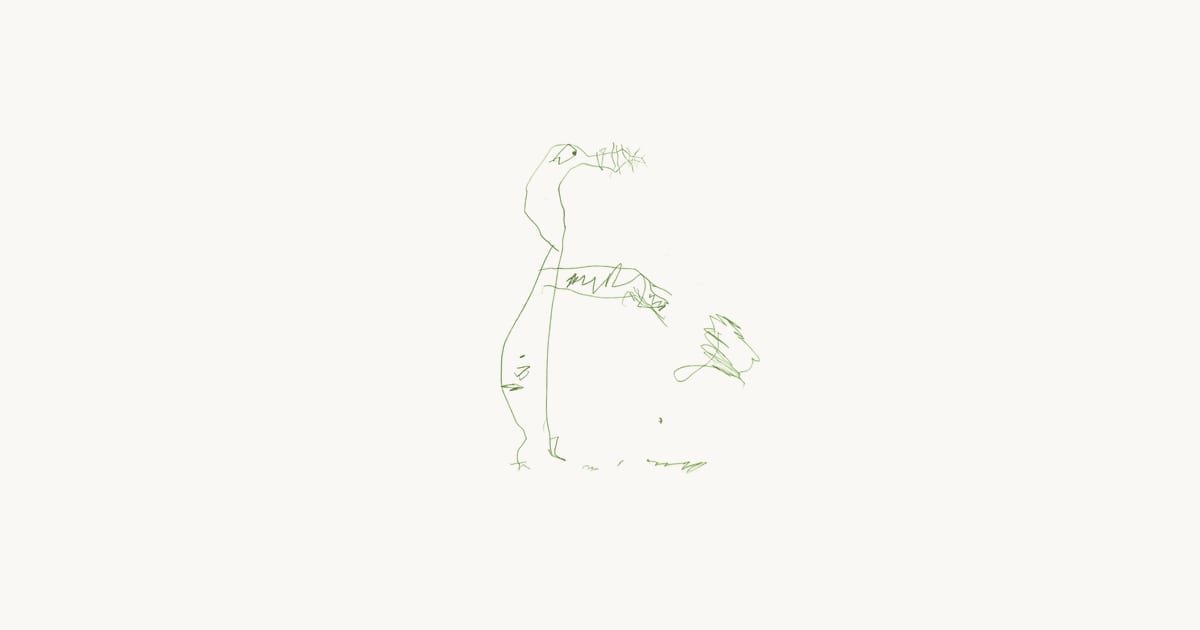
The pile on the kitchen table
It started with tempera paint on printer paper.
My two boys come home from Kita every afternoon with drawings. Animals, rockets, self-portraits where everyone has seven fingers. They pile up on the kitchen table.
One Tuesday I counted thirty-four. I couldn’t throw them away. I couldn’t keep living like this either. That’s how I ended up building a kids art app.
No business plan. No market research. Just a pile of drawings and a guilty conscience.
My 4-year-old had written his name on one of those drawings for the first time. My younger one had drawn something he called “the big blue,” which was, in fact, big and blue. These things matter.
But I also needed the kitchen table back for dinner.
Everything I tried before building a kids art app
I tried the obvious things first.
Photos on my phone. They ended up in the camera roll between grocery receipts and screenshots of train schedules. Try finding a specific drawing six months later.
I made a folder called “Kids Art.” Then another called “Kids Art 2024.” Then one called “Sort Later.” I never sorted later.
I bought a physical binder with plastic sleeves. It filled up in two months. It now lives in the basement, where Zürich humidity and tempera paint are slowly creating a mold colony.
My wife suggested a system. I tried one. I even wrote about what works and what doesn’t. But every system breaks down when you’re the kind of person who leaves coffee mugs on the bathroom sink.
The accidental app
Here’s what changed.
I took a photo of a drawing on the kitchen table. The drawing looked great. The kitchen table, the crumbs, the edge of a milk glass… less great. Something about it bugged me.
I’m a developer. So I wrote a script to strip the table out. Just the drawing, clean background.
It worked for crayon on white paper. It fell apart completely for watercolors.
A 4-year-old’s brushstrokes bleed to the edge of the page. The paper warps. The colors are translucent.
Getting a clean extraction from a watercolor took me months. A child’s art is harder for a computer to parse than a medical scan. Nobody tells you this.
But once the background was gone, something clicked. The drawing looked like it belonged in a book. Not on a kitchen table between breadcrumbs and Lego. In an actual book.
So I kept building. The script became a prototype. The prototype became Scribbly.
You photograph the drawing. The background gets removed. You tag it with the child’s name, their age, maybe a caption. Over time you build a collection, organized by kid, sorted by date.
When you’re ready, you turn a year of drawings into a printed photo book. Real paper, hardcover, the kind of thing grandparents actually want on their shelf.
That’s it. No AI drawing lessons. No social feed. No gamification.
What building this taught me
Two things surprised me.
First: the window closes. Kids draw constantly from ages 2 to 7 or 8. Then it slows down. By 10, most of them have stopped. We explored the research behind this in Why Kids Stop Drawing (And Why It Matters).
You think you have years to figure this out. You have maybe four good ones.
Second: the caption matters more than the art. A drawing of a brown blob means nothing in ten years. A drawing of a brown blob labeled “Papa at work, by Luca, age 4” is something you’ll keep forever.
The metadata is the memory. Who drew it, when, what they said it was. That’s the part you forget first.
I also learned there are two types of parents. Those who keep everything and lose track of what’s what. And those who declutter regularly and one day realize they threw away something that mattered.
Both types feel guilty. The guilt is the constant.
Where things stand
The app is free. It runs on iOS and on the web. You only pay if you order a printed book.
It’s bootstrapped. Just me, working from Zürich. No investors, no team of twelve, no press tour.
Someone asked what my competitive moat is. I said I’m the only person stubborn enough to have built this.
Swiss practicality, I guess. Build something that works. Charge a fair price. Don’t overhype it.
If you have kids who draw, and a kitchen table you’d like to eat dinner on again, it might be worth a look. And if you’re not sure how to photograph the artwork before clearing the table, we wrote a guide for that too.