Sometime in the next few weeks, your kid will leave Kita for the last time. Not just the end of this school year. The actual end, because in September they’re starting school.
Two years, three years. However long it was.
The caregivers who watched your child go from nonverbal to opinionated, from unsteady to running, from scribbling circles to drawing actual things with heads that have both ears. Those people are about to become part of the past.
And somewhere in your house, in multiple places, is the art from all of it.
What happens to Kita art
It comes home in waves. A drawing on Tuesday. A finger-painted something on Thursday. The big end-of-term bag with everything from the last three months in a pile.
You look at it. Some goes on the fridge. Some goes in a drawer. Some gets recycled when nobody’s watching, and you feel mildly guilty for two days and then forget.
By the end of a full year, you have a scattered archive: twenty things photographed, fifteen originals in a box, a few on the fridge, some gone.
I know this because I’ve been there. When my older son left his Kita last summer, I realized I had art from three years of his life distributed across my phone, a box in the hallway, and a pile on the bookshelf that had resisted every attempt at organization.
Why this chapter is different
End of school year is one thing. End of Kita is another.
At school, kids move to a new class, maybe a new teacher. The rhythm continues. At Kita, it just stops. The relationship with the caregivers ends. The routines end. The stage of childhood where they brought home a different drawing every other day ends too.
Your kid won’t draw like this next year. Not because they’ll stop drawing, but because something will have changed. The four-year-old who drew people with enormous heads and tiny legs, who put the cat in every picture, who went through a phase of drawing only purple things. That version is almost past.
The drawings are the record of it.
Making the book
First: gather everything. Pull out the box. Scroll back through your phone. Don’t sort yet, just collect.
Second: photograph anything you haven’t already. You probably have a few originals that were never captured. Do this now, while there’s still time. Getting the drawing well-lit and flat is all it takes, and the rest can be cleaned up later.
Third: pick fifteen to twenty-five pieces. Not the “best” by any measurable standard. The most characteristic: the progression from scribble to person, the funny phase, the drawing they worked on for forty-five minutes, the one they handed directly to you with “this is for you, Papa.”
Fourth: arrange them chronologically. This is what makes it a record instead of a collection. When you put the drawings from eighteen months ago next to the ones from last month, you see what changed. That’s the thing worth keeping.
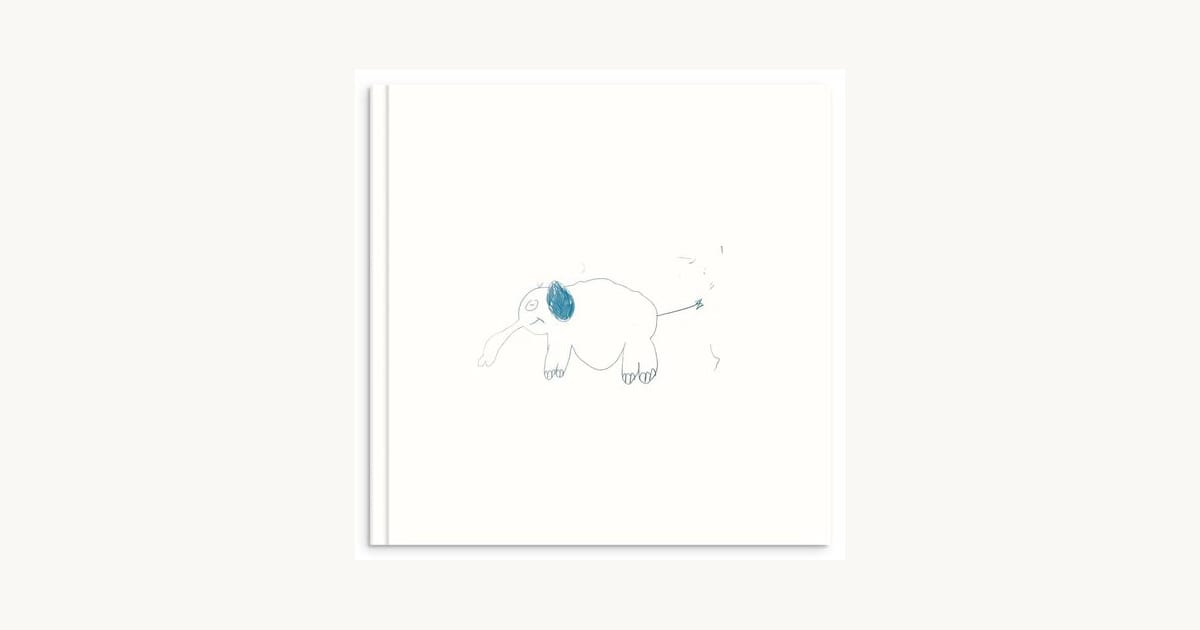
For the actual book, background removal is the difference between a photo album and an art book. A drawing photographed on your kitchen table looks like a snapshot. The same drawing on a clean white page looks like someone took it seriously. Scribbly does this automatically: photograph the art, the app strips the background, you arrange the pages and order the book. (Full disclosure: I built it, for exactly this situation.)
Order in the next two or three weeks if you want it before summer.
What goes in, what doesn’t
The best Kita memory books aren’t the most complete. They’re the most specific.
Yes:
- Progression pieces. First recognizable person. First time they wrote their name. The drawing where you can see them figuring out that things have shadows.
- The funny ones. The family portrait where someone has no neck. The dog that looks like a table. The house where the car is bigger than the building.
- The phases. The month everything was green. The six-week period when every drawing had a volcano. These feel permanent when they’re happening and completely absent six months later.
- Anything they made specifically for someone. “This is for you, Papa” or “I made it for Oma”: these are the headliners.
No:
- Worksheets and printed coloring pages
- Group projects where your kid’s contribution is unclear
- Anything generic
This is a greatest-hits record, not an archive. Twenty well-chosen pieces are worth more than sixty that blur together.
If you’re not sure what’s worth keeping at different ages, there’s more on that here: Toddler Scribbles vs School-Age Art.